
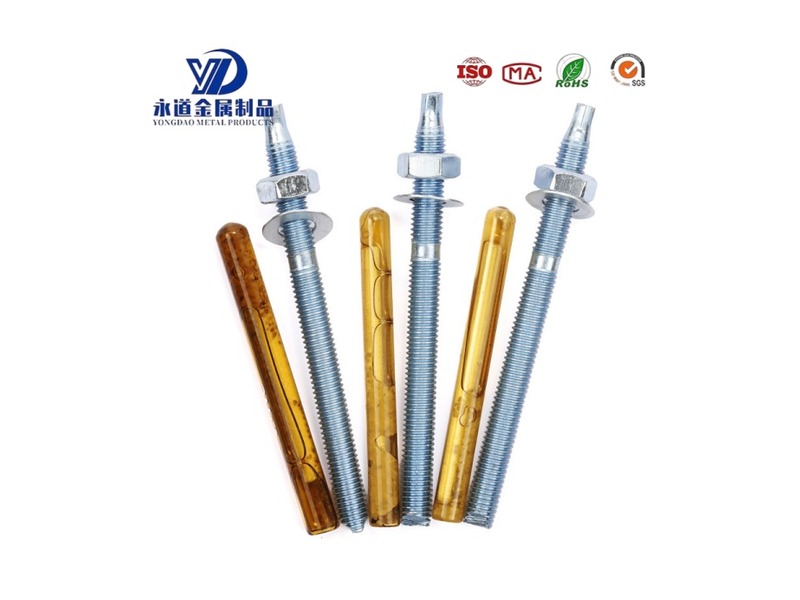
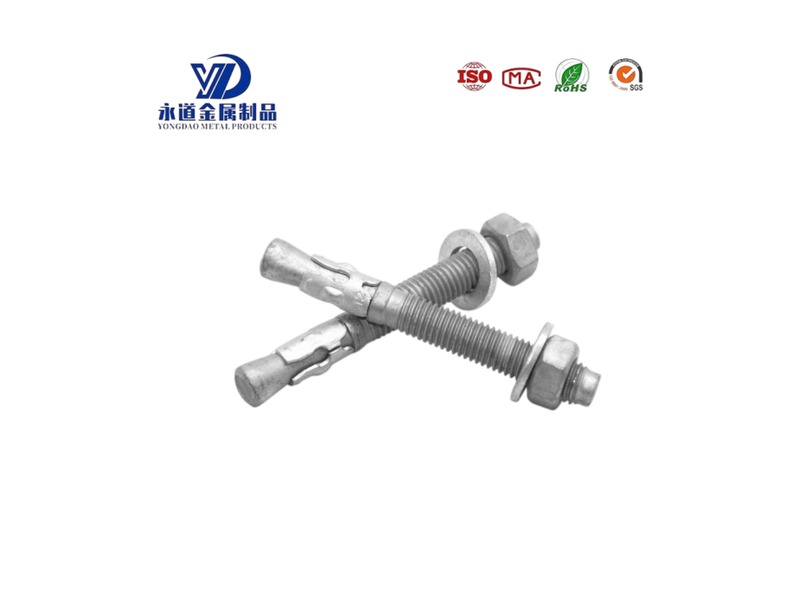
Chemical Anchor Bolt
Chemical anchor bolt · grade 8.8 carbon steel · bonded anchoring system for concrete, bridges and tunnels, structural steel connections and heavy support fixing
Product parameters
- Product NameChemical Anchor Bolt
- CategoryExpansion Anchor / Chemical Anchor Bolt
- BrandYONGDAO METAL
- Surface Finish—
- MaterialCarbon Steel
- Size Range—
- GradeGrade 8.8
- StandardETAG 001
- MOQ1000 pcs
- OriginHandan, Hebei, China
Items marked "—" are subject to confirmation by actual inquiry; please contact us by email or phone for detailed specifications and quotations.
Product introduction
A chemical anchor works on a different principle from a mechanical one. Instead of a clip that expands against the hole wall, a two-component resin is injected into the cleaned hole, the threaded rod or bolt is spun in, and the resin cures to bond the steel to the concrete along the full bonded length. Load is transferred through the resin and the concrete around it rather than through a localised expansion zone, so the fixing behaves more uniformly and suits closer spacing and thinner base material than a mechanical anchor of similar size.
The installation sequence has to be followed in order, because each step protects the next. Drill to the specified diameter and depth, then clean the hole thoroughly with a brush and blow-out pump, repeating the brush-and-blow cycle as specified; dust is the single most common cause of a failed bonded anchor. Inject resin from the bottom of the hole so it fills without voids, insert the bolt with a slow twisting motion, and leave it undisturbed for the full curing time, which depends on resin type and base material temperature.
Curing time is not a formality. Resin gains strength over a defined period, and any movement or loading before that period ends damages the bond permanently, even if the anchor later appears tight. Cold weather lengthens curing considerably, and near-freezing conditions may require a different resin or heated measures. The correct approach is to read the resin manufacturer's cure schedule for the actual substrate temperature on site, not to work from a single figure.
This bolt is grade 8.8 carbon steel, which gives a higher tensile property class than the 4.8 anchors in the mechanical range. That matters because bonded anchors are often used for heavy supports, base plates, bridge and tunnel equipment, and structural steel connections where the steel section must not be the weak link. Property class is a material designation; the capacity of a bonded anchor still depends on the resin, the bonded length, the concrete strength and the edge and spacing geometry, and must be taken from the system's design values.
Because the anchor relies on the resin system rather than on its own geometry alone, the bolt and the resin must be treated as one assembly. Mixing a bolt from one source with a resin from another without design data leaves the capacity undefined. Where approval documentation exists for a specific bolt, resin and base material combination, that combination should be used as tested, including the specified hole diameter, cleaning routine and cure time.
Applications follow the strengths of the system: concrete fixing where close spacing or thin sections rule out mechanical expansion, heavy base plates for structural steel, equipment in bridges and tunnels, solar and energy storage mounting frames, and pipework supports subject to vibration. In each case the design should specify the bolt, the resin, the embedment and the curing window together, and site work should follow the hole cleaning and cure discipline that the design assumed.
Finally, documentation. Bonded anchors are system products, so the record that matters is which bolt, which resin, which hole diameter and which cure time were used, together with the base material temperature at installation. Keeping that record for each pour or zone makes later inspection and any future modification far easier, and it is the first thing an engineer asks for when a support has to be re-rated. On repetition work, standardising one bolt and resin combination across a project also removes the most common source of site error.
Applications
FACTORY TOUR
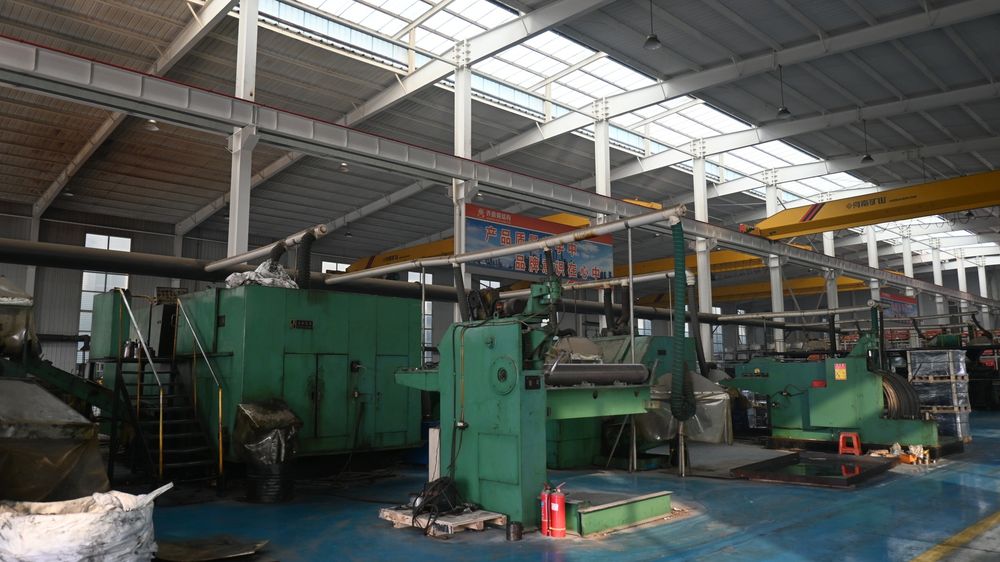
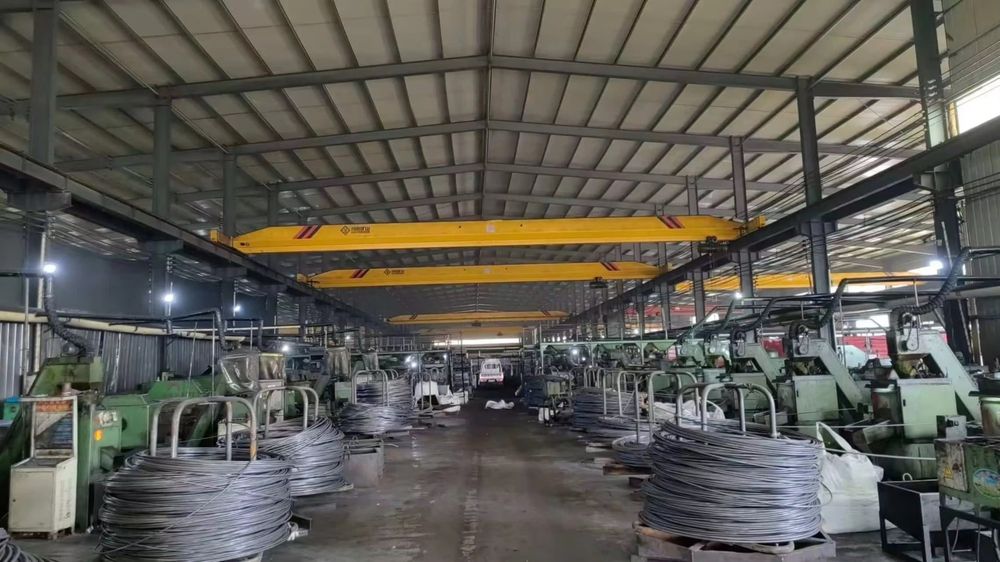
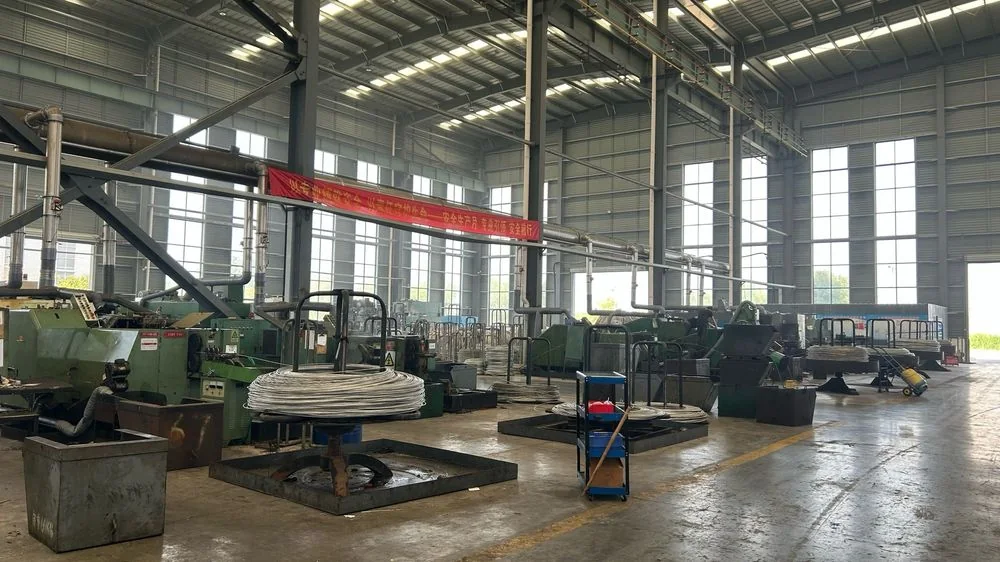
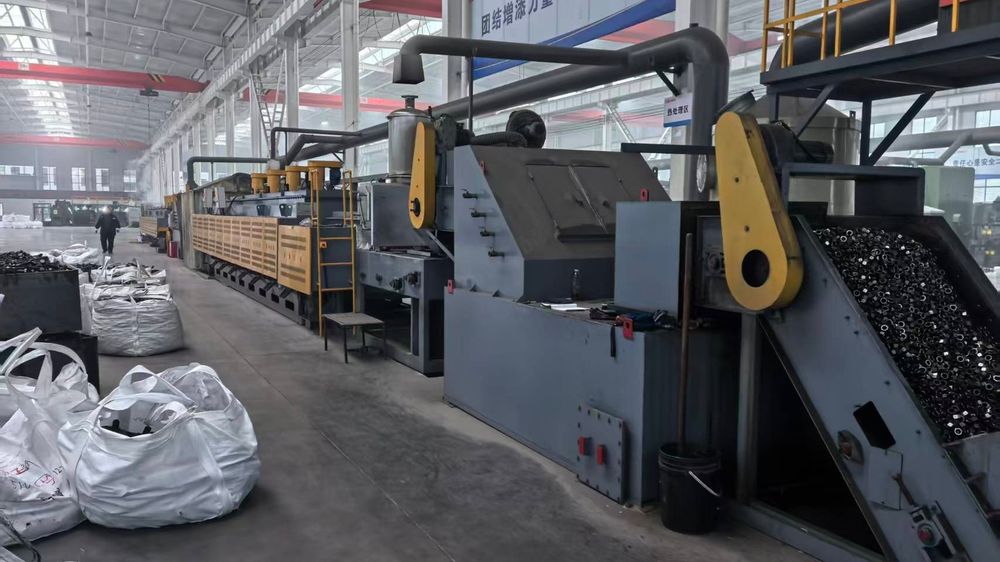
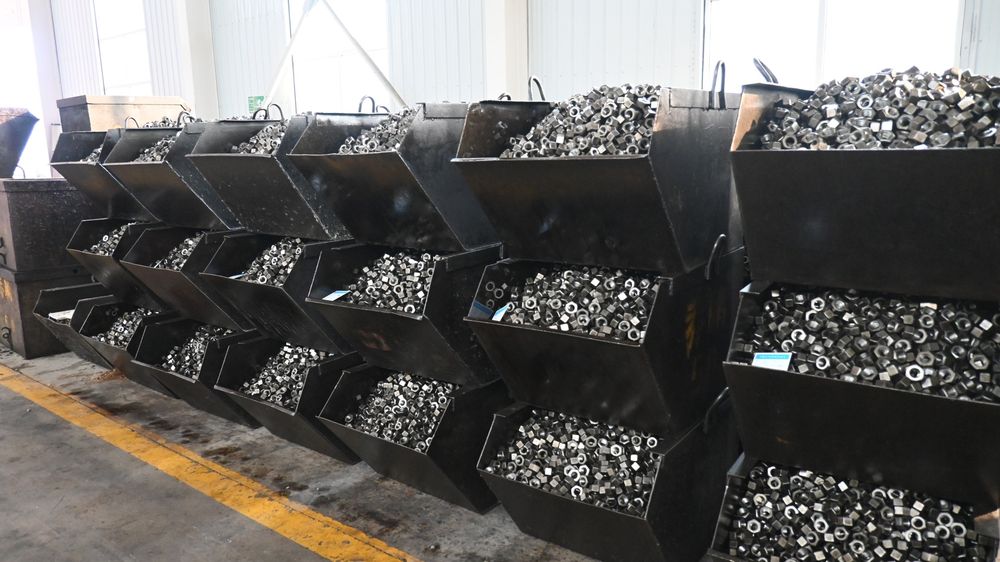
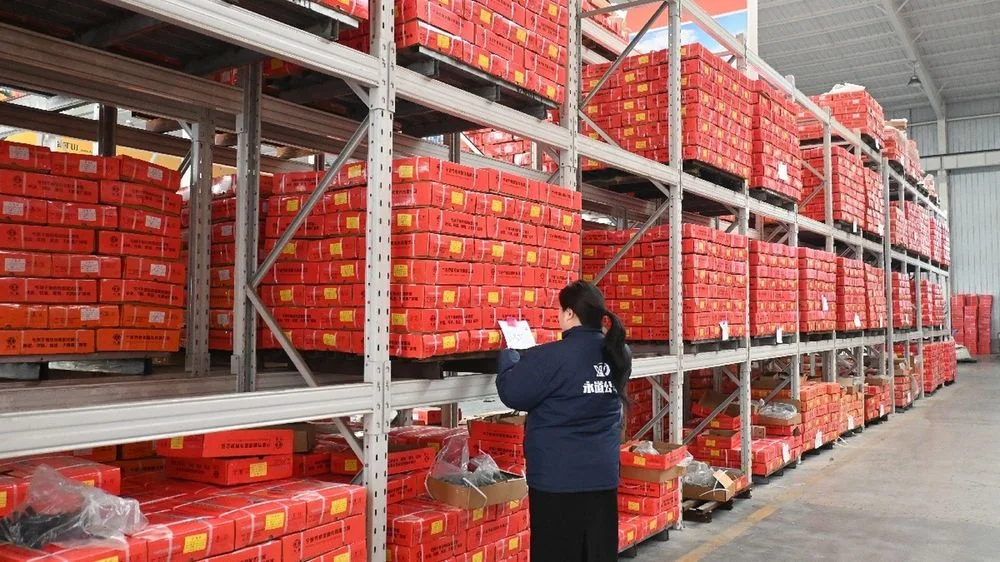
PACKING & DELIVERY
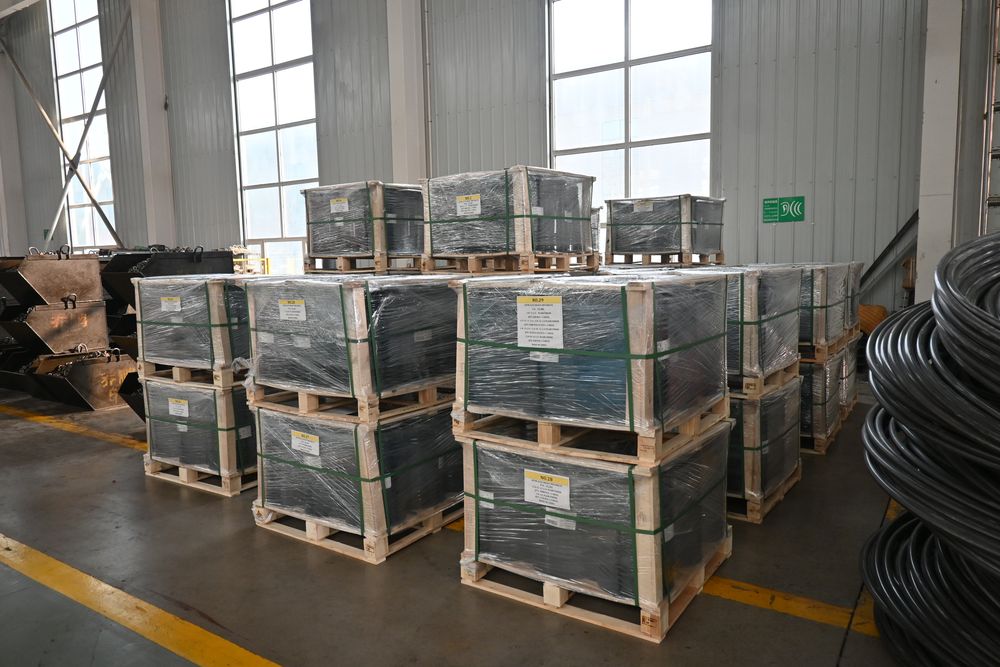
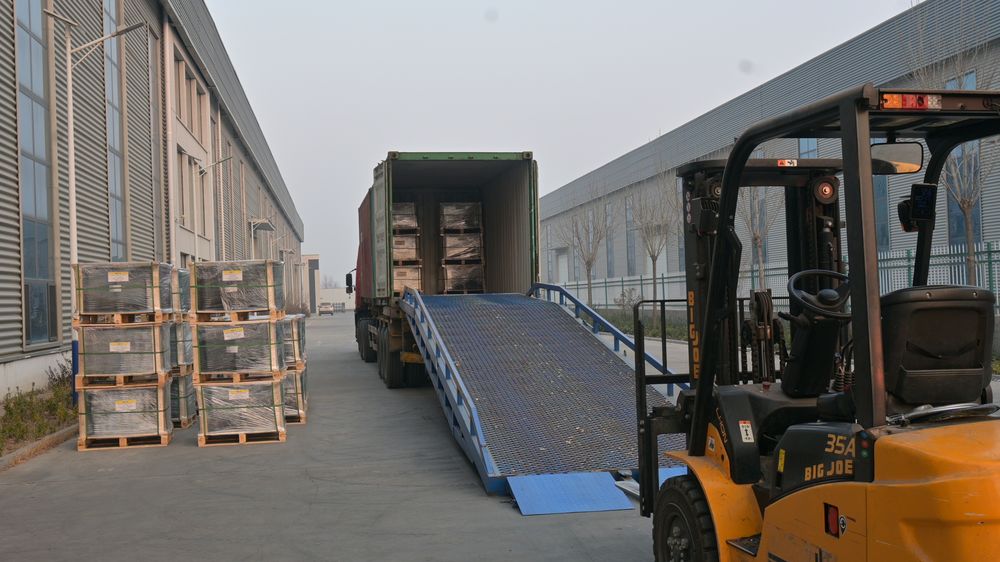
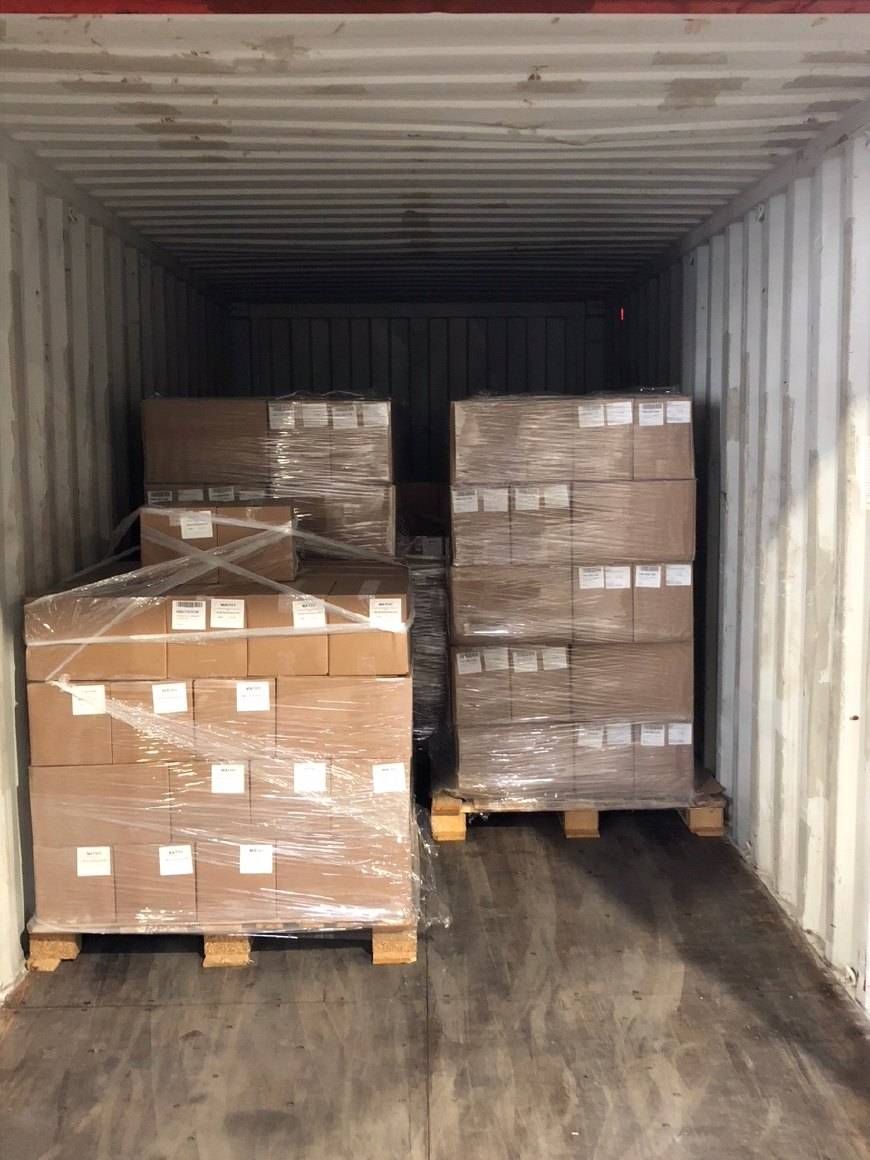
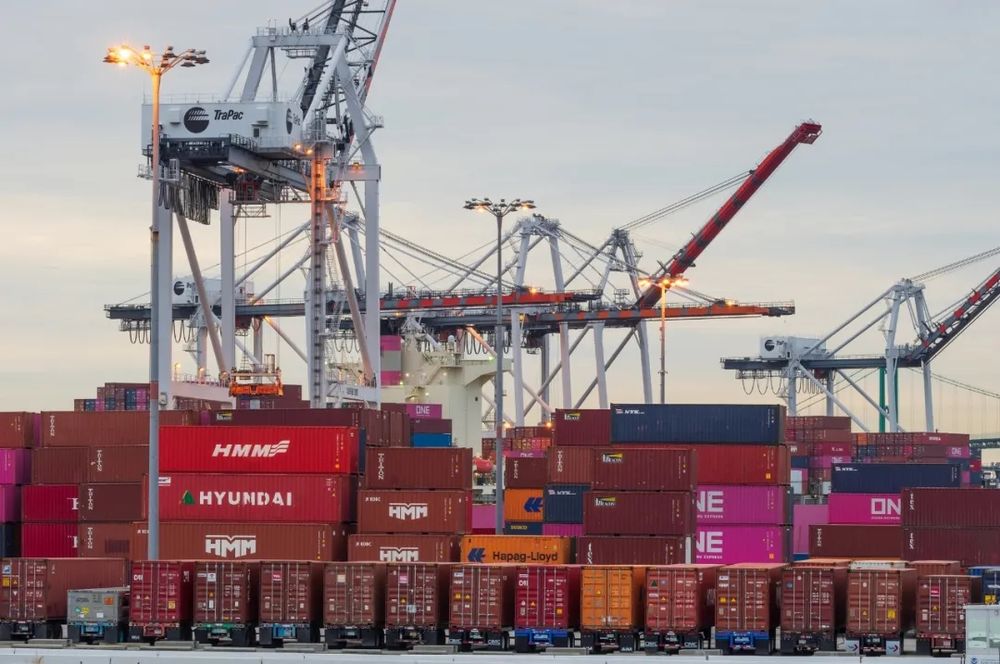
Customized delivery process
Order precautions
Before placing an order, please confirm the required product category with our sales or service staff. Customized products are not eligible for return or exchange; ex-works prices do not include taxes or freight. Every batch is strictly inspected before shipment, and minor imperfections are not considered quality problems. Please check the goods carefully upon receipt and contact us promptly if you have any questions.
- 1Provide custom drawings
- 2Choose material
- 3Get a quotation
- 4Sign the contract
- 5Production
- 6Packing & shipping
- 7Confirm receipt
- 8Order completed
Product inquiry
Related products
Frequently Asked Questions
Common questions about production, customization and orders
How is a chemical anchor different from a mechanical wedge anchor?
A chemical anchor bonds the bolt to the concrete with a curing resin along the full bonded length, spreading load more evenly and allowing closer spacing and thinner base material. A wedge anchor holds by local expansion of a clip. Chemical systems need curing time before loading; mechanical anchors can be loaded immediately.
Why is hole cleaning so critical for resin anchors?
Resin bonds to the concrete surface inside the hole. Dust and debris sit between the resin and the concrete, so the bond forms on loose material instead of the substrate. Brushing and blowing the hole in the specified cycle is not optional; it is the step most often responsible for failures.
How long must the anchor remain undisturbed?
For the full curing time given by the resin manufacturer for the actual base material temperature. Cold concrete lengthens curing significantly, and near-freezing conditions may require a different resin. Movement or loading before curing finishes damages the bond permanently.
Can a chemical anchor be used in wet or flooded holes?
Only with a resin system specified for that condition. Standard resins are intended for dry holes, and water in the hole interferes with bonding. Where wet conditions exist, the correct approach is to select a suitable resin and follow its instructions rather than to install a standard system and hope.
Why grade 8.8 for this bolt?
Grade 8.8 gives a higher property class than the 4.8 mechanical anchors, so the steel is less likely to be the limiting element in heavy supports, base plates and structural connections. Capacity still depends on the resin, bonded length, concrete strength and geometry, taken from the system design values.
What is the MOQ and lead time?
MOQ is 1000 pcs as shown on this page. Stock sizes ship in around 7 days; orders with specific lengths, thread ends or resin-compatible configurations are typically produced in 15 to 25 days.