
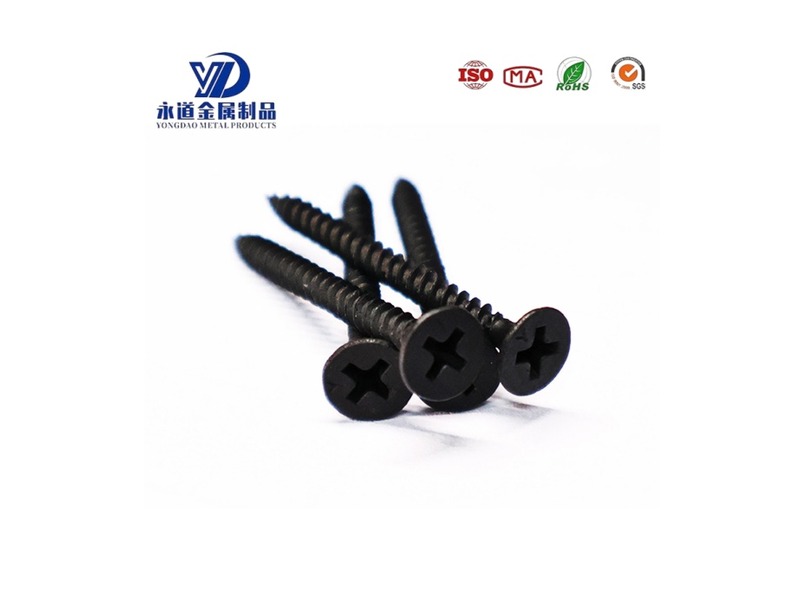
Single-Thread Coarse Pitch Grey Phosphate Drywall Screw
Cross recess drywall screw · single coarse thread · grey phosphate · case hardened carbon steel · for plasterboard on timber studs and multi-layer boards
Product parameters
- Product NameSingle-Thread Coarse Pitch Grey Phosphate Drywall Screw
- CategorySelf-tapping Screw / Drywall Screw
- BrandYONGDAO METAL
- Surface FinishGrey phosphate
- MaterialCarbon Steel
- Size Range—
- GradeCase hardened
- StandardDIN 18182
- MOQ1000 pcs
- OriginHandan, Hebei, China
Items marked "—" are subject to confirmation by actual inquiry; please contact us by email or phone for detailed specifications and quotations.
Product introduction
Grey phosphate and black phosphate do the same job chemically and differ mainly in appearance, and that difference matters in more places than buyers expect. Some projects, particularly where boards are inspected before decoration or where the screw heads stay visible in an industrial ceiling, are specified with grey phosphate because the tone blends with grey board papers and galvanized framing better than a black head does.
Functionally this is the coarse-thread configuration. A single coarse thread advances quickly per revolution, drawing the board down to a timber substrate in fewer turns and reducing the time the head spins against the paper. That combination of speed and grip is what makes coarse thread the default for timber studs. In thin board, or where very fine depth control is needed, the fine-thread version of the same screw is the better match.
The screw is case hardened carbon steel. The hardened surface lets the point and thread pierce the paper facing and the gypsum core without folding over, while the core remains ductile enough to carry driving torque without shearing at the shank. This is checked as part of routine inspection, because a batch with excessive case depth becomes brittle and a batch with insufficient depth dulls quickly and tears the board.
Grey phosphate is a conversion coating with a light oil film. Because it converts the surface rather than depositing a layer, thread form is unaffected, and driving feel stays constant between production lots. Protection is intended for interior conditions in dry or normally heated buildings; it is not a wet-area or exterior finish, and where boards are fixed in bathrooms or semi-exposed structures a more protective specification should be selected.
On the job, the mechanical rules are unchanged: drive square to the board, set the clutch so the head dimples just below the paper, and keep to the specified spacing and edge distance so the gypsum core does not crumble at the perimeter. Collated strips speed up ceiling work and keep depth consistent, since the nose piece of the tool controls the set as much as the operator does.
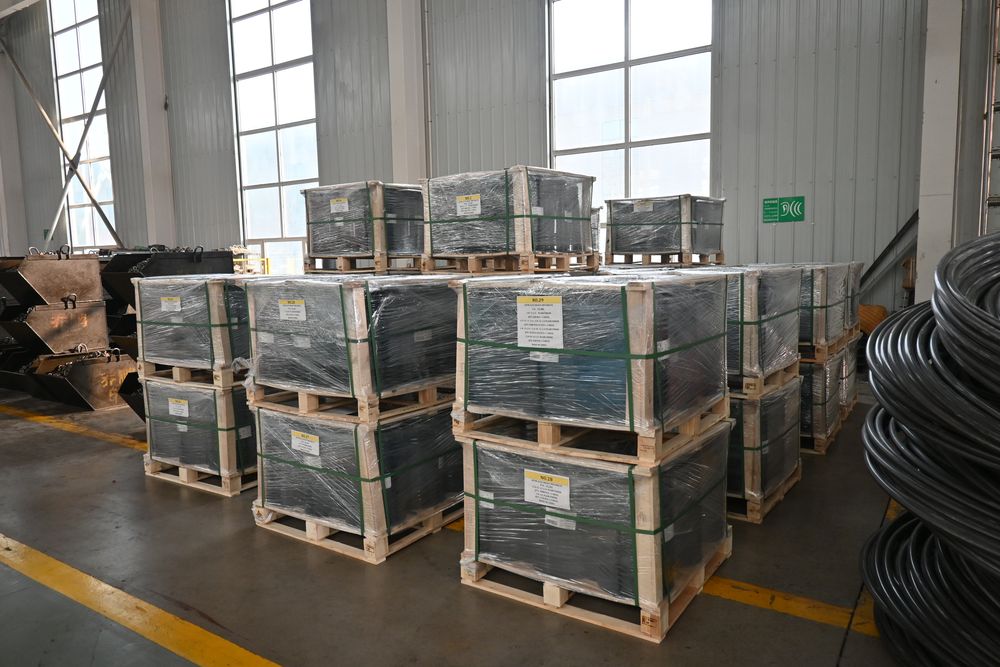
For procurement, the practical question is usually continuity. A crew that has dialled in its drivers does not want the head geometry or coating to shift between deliveries, because every change shows up as a different dimple on a whole ceiling. We hold coating, case depth and recess dimensions inside a fixed band, and supply bulk cartons or collated strips, with stock sizes dispatched inside about a week.
There is also a practical point about inspection. On projects where the framing and first fix are inspected before decoration, the fixings are visible and their pattern is read as evidence of workmanship: uniform dimples, consistent spacing, no torn paper, no screws left proud. A grey phosphate head photographed against grey board paper looks tidier in that record than a black one, and that is often the real reason a specifier names grey rather than black. It is a small detail, but on large residential and commercial packages the visual consistency is noticed.
Applications
FACTORY TOUR
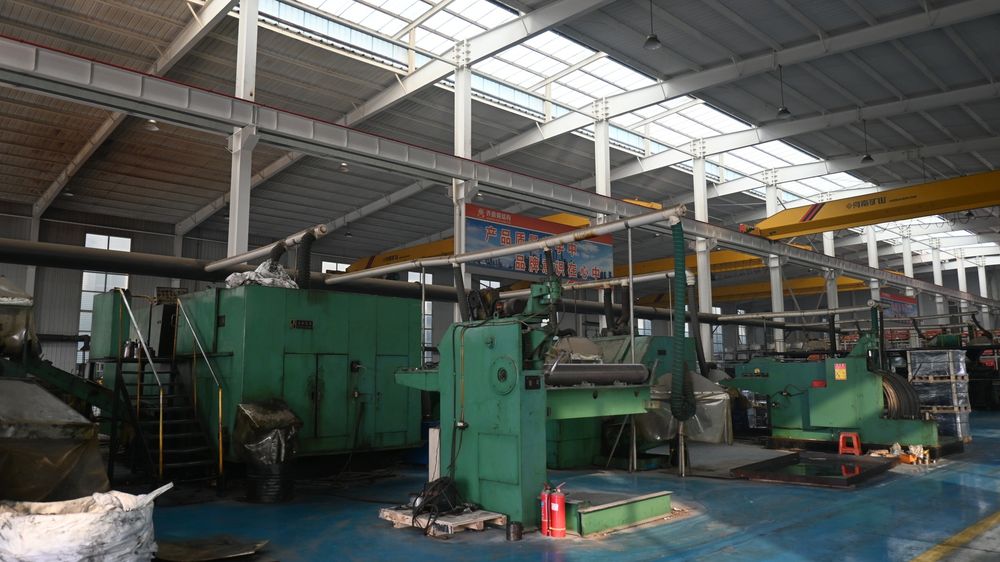
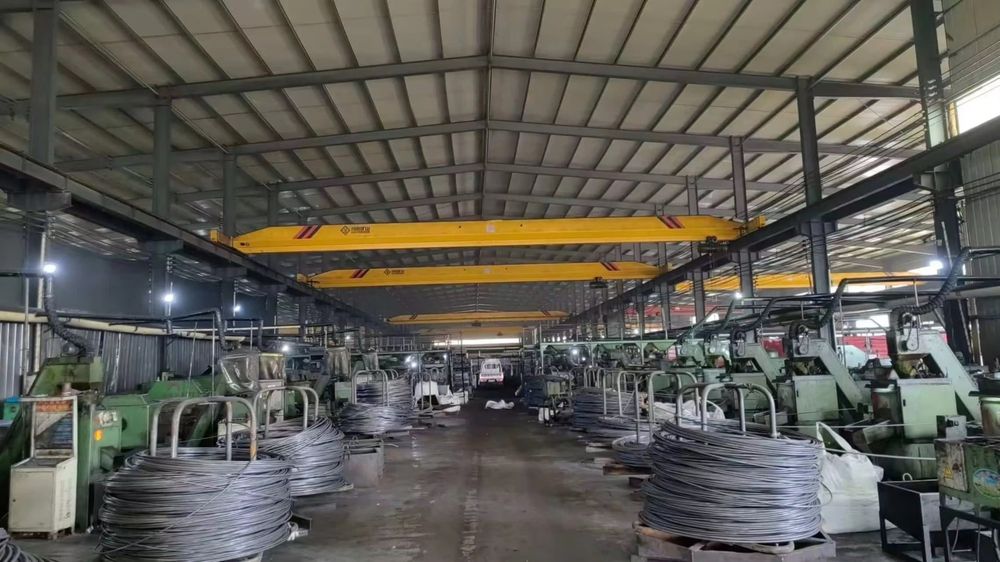
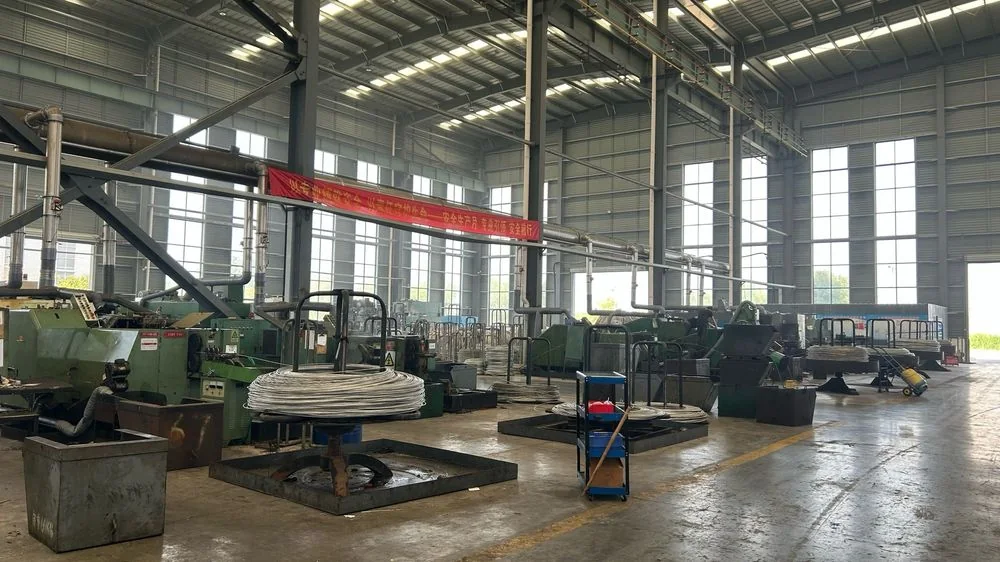
PACKING & DELIVERY

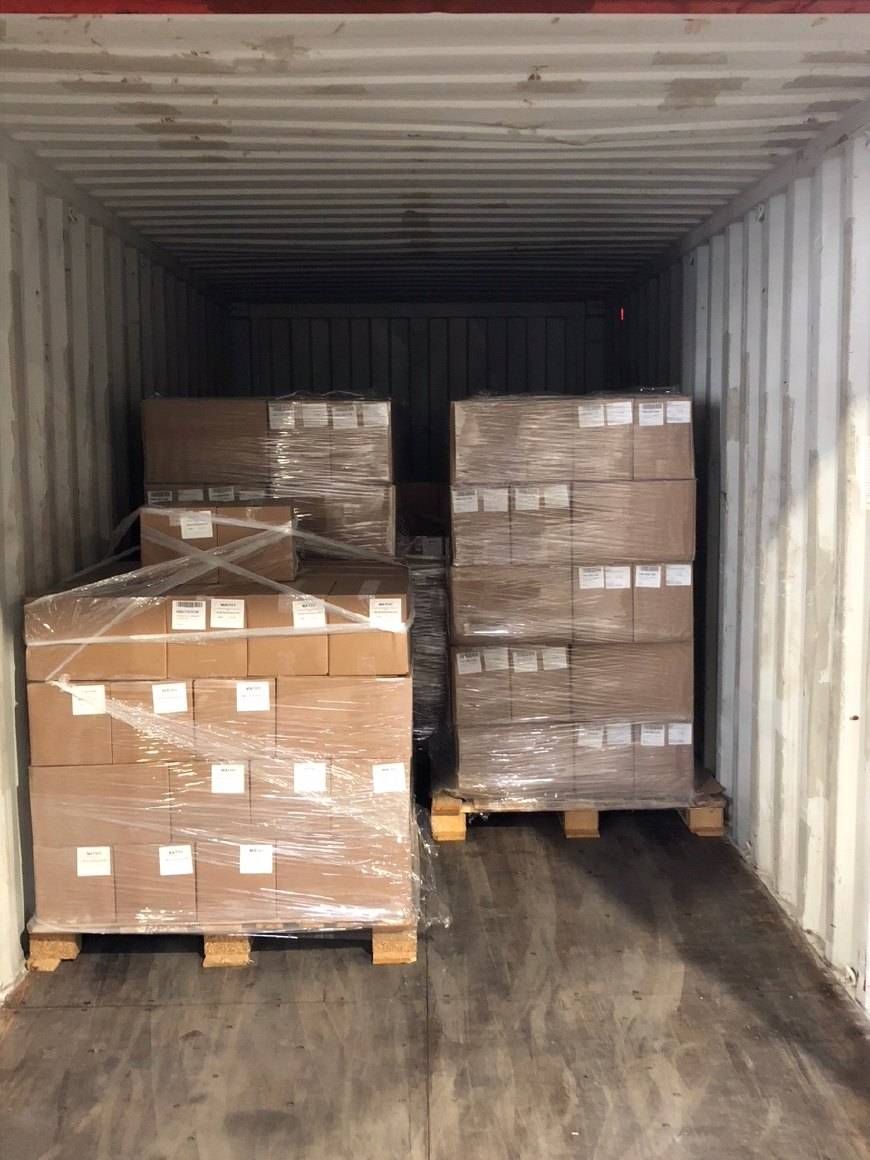

Customized delivery process
Order precautions
Before placing an order, please confirm the required product category with our sales or service staff. Customized products are not eligible for return or exchange; ex-works prices do not include taxes or freight. Every batch is strictly inspected before shipment, and minor imperfections are not considered quality problems. Please check the goods carefully upon receipt and contact us promptly if you have any questions.
- 1Provide custom drawings
- 2Choose material
- 3Get a quotation
- 4Sign the contract
- 5Production
- 6Packing & shipping
- 7Confirm receipt
- 8Order completed
Product inquiry
Related products
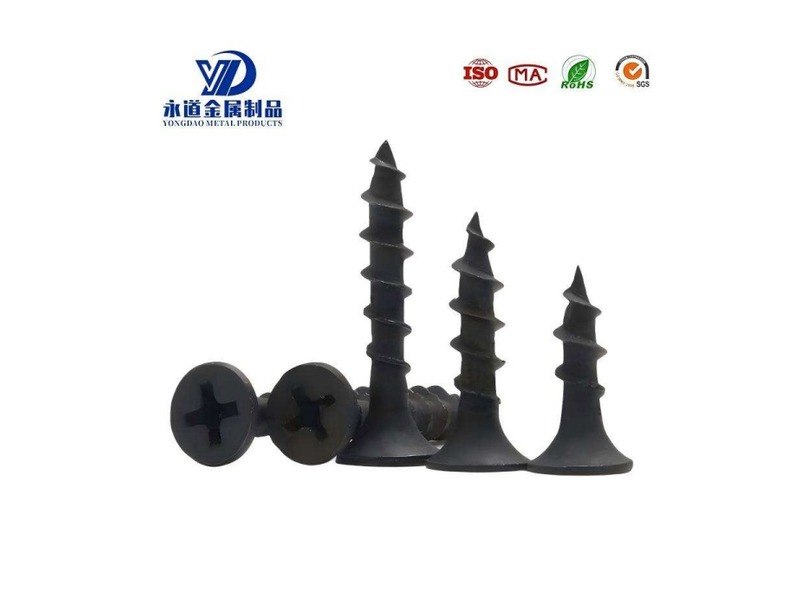 Single-Thread Coarse Pitch Black Phosphate Drywall Screw
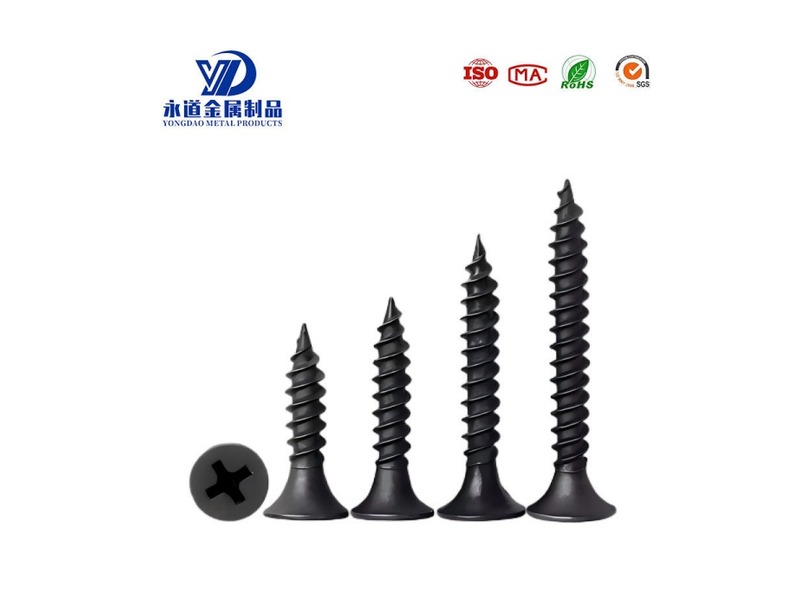 Single-Thread Fine Pitch Black Phosphate Drywall Screw
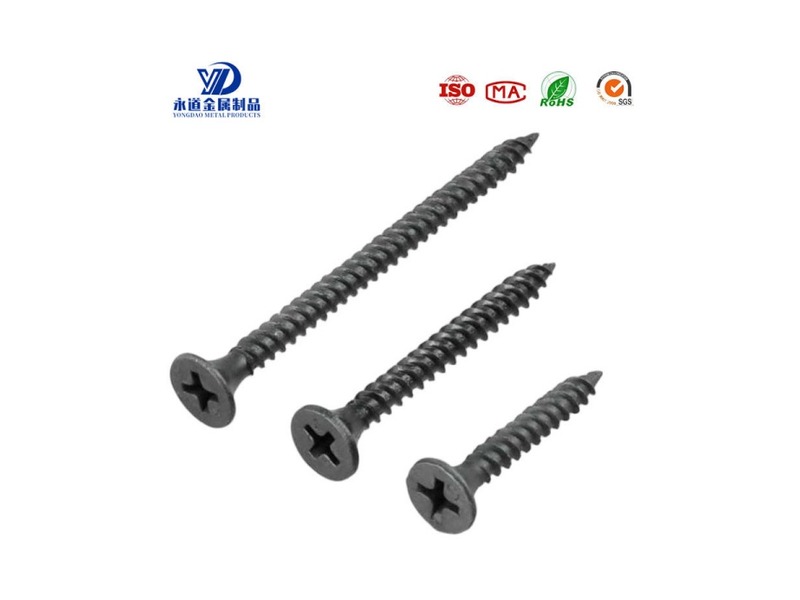 Single-Thread Fine Pitch Grey Phosphate Drywall Screw
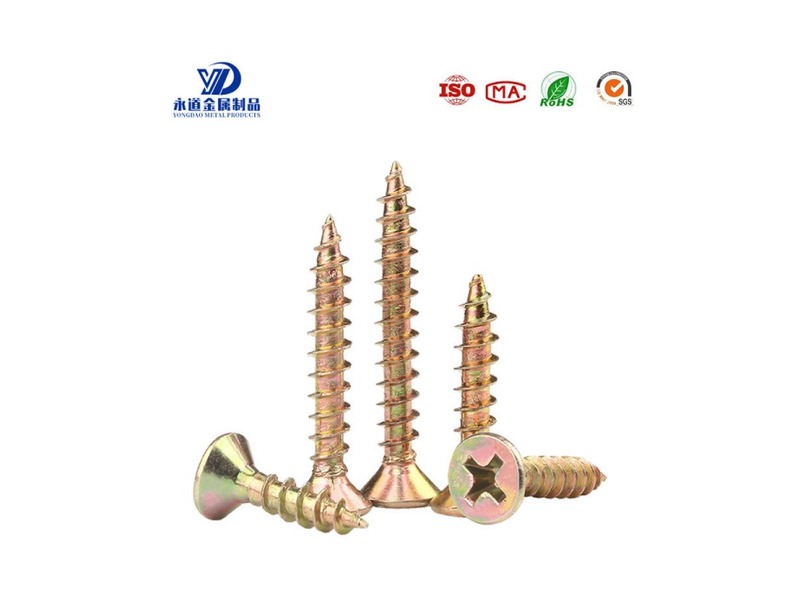 Phillips Drive 1022A High-Strength Chipboard Screw
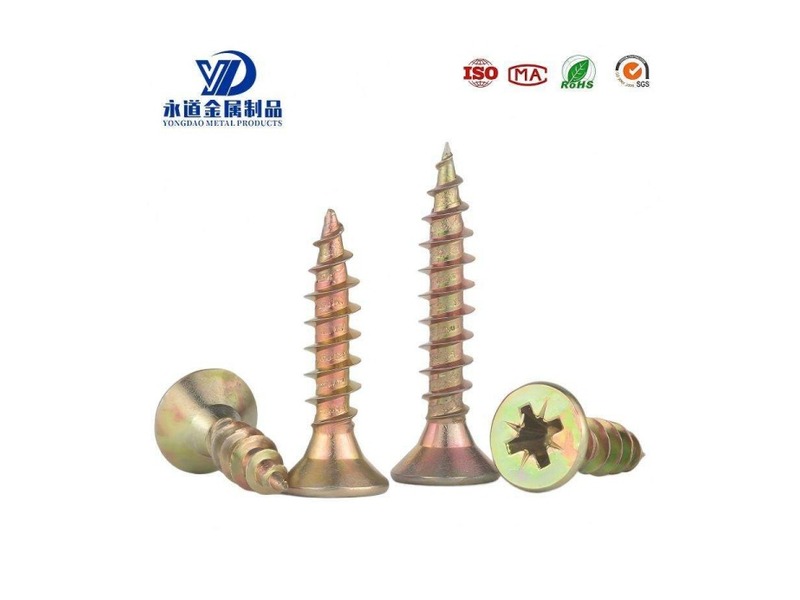 Pozidriv 1022A High-Strength Chipboard Screw
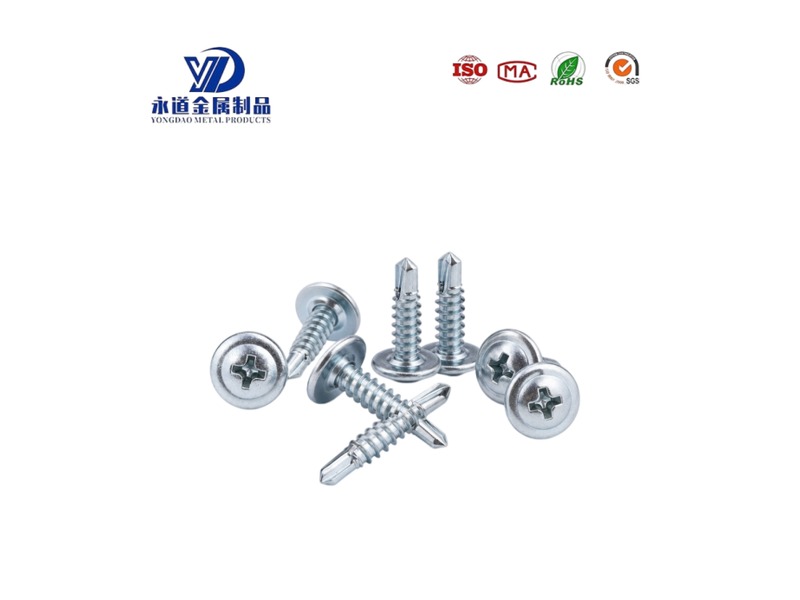 Washer Head Large Truss Head Self-Drilling Screw
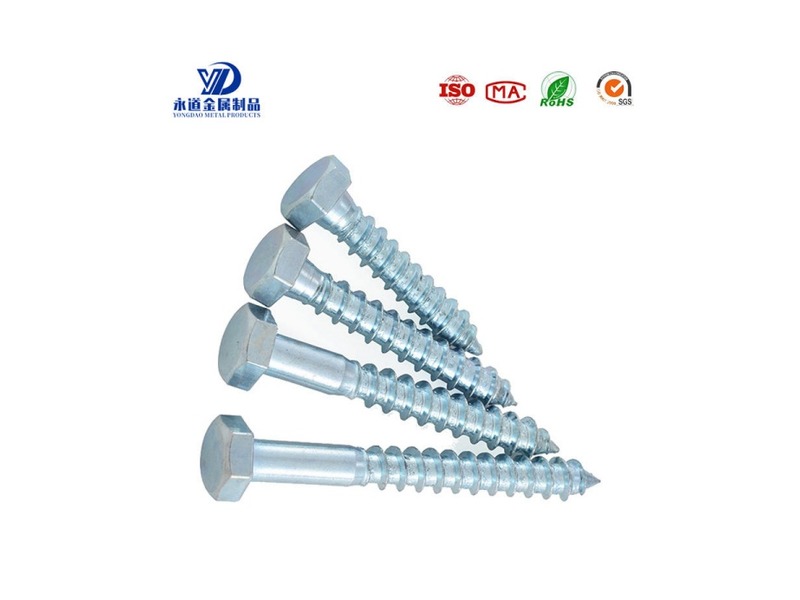 Zinc-Plated Hex Head Self-Tapping Wood Screw
Frequently Asked Questions
Common questions about production, customization and orders
Is grey phosphate different from black phosphate in performance?
Chemically they are both conversion coatings with a light oil film and give similar modest protection for dry interior work. The choice is usually about appearance, since a grey head blends with grey board paper and galvanized framing while a black head is more visible.
Which thread suits timber studs?
Coarse. A single coarse thread advances faster and grips softwood better, so the board is drawn down in fewer turns with less paper abrasion. Fine thread is intended for thin boards and metal studs where depth control and turn count matter more.
How do I avoid breaking the paper face?
Lower the clutch, hold the driver square and let the depth nose stop the screw. An over-driven head tears the paper and weakens the fixing; an under-driven one leaves the board loose. Test on an offcut from the same board batch before starting a large ceiling.
Can this screw be used on metal studs?
It can pierce light gauge steel, but the fine-thread version is the better match because it engages more turns in a thin section. Coarse thread risks stripping the stud, a failure that stays hidden behind the board until the panel works loose.
Are the screws supplied collated?
Bulk cartons are standard and collated strips for auto-feed tools are available on request. Collated strips give more consistent depth on ceilings and speed up long runs, which usually outweighs the small cost difference on large projects.
What are the MOQ and lead times?
MOQ is 1000 pcs as listed on this page. Stock items ship within about 7 days, and custom lengths, coatings or collation are produced in 15 to 25 days depending on order volume.