
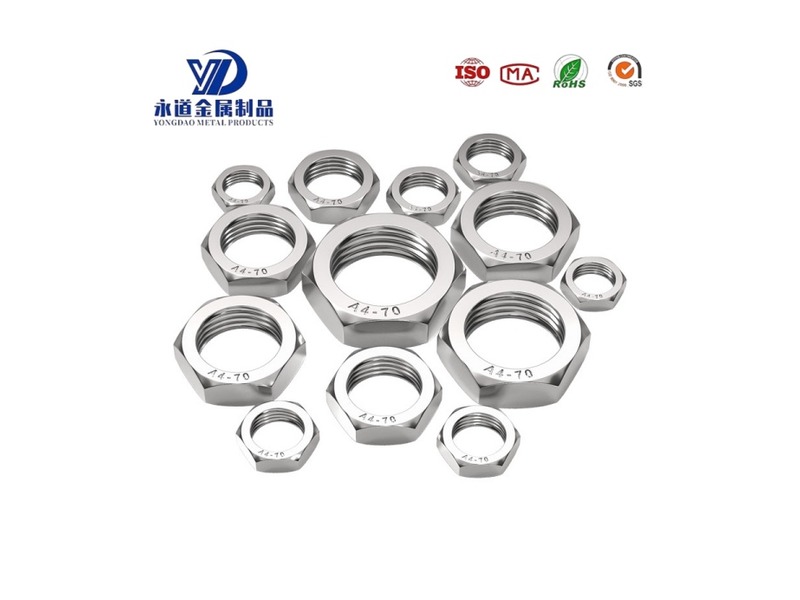
Stainless Steel Thin Hex Nut
Thin hexagon nut to DIN 936 in stainless steel A2-70 or A4-80, M8~M27, for wet, food, marine and clean-environment joints with limited height
Product parameters
- Product NameStainless Steel Thin Hex Nut
- CategoryNut / Hex Nut
- BrandYONGDAO METAL
- Surface Finish—
- MaterialStainless Steel
- Size RangeM8~M27
- GradeA2-70 / A4-80
- StandardDIN 936
- MOQ1000 pcs
- OriginHandan, Hebei, China
Items marked "—" are subject to confirmation by actual inquiry; please contact us by email or phone for detailed specifications and quotations.
Product introduction
This is the stainless version of the DIN 936 thin hex nut: a low-profile hexagon body in A2-70 or A4-80 stainless steel, metric coarse thread M8 to M27, supplied uncoated because the corrosion resistance comes from the alloy itself. It is chosen where a full-height nut will not fit and where plating would either be attacked by the environment or contaminate the product, so the usual homes are food and beverage equipment, water treatment, marine fittings, architectural hardware and clean rooms.
A2-70 covers the common 304-type austenitic grade and handles most atmospheric, freshwater and mildly chemical service. A4-80, the 316-type grade with molybdenum, is specified where chlorides are present: coastal air, de-icing salt, swimming pool plant and many process streams. The 80 suffix indicates a higher cold-worked strength level than 70, and because stainless fasteners are not heat treated after forming, that strength comes from the wire and the heading process. Tell us the environment and we will match the grade rather than defaulting to A2.
Stainless threads behave differently from carbon steel in assembly. Galling, the cold welding of nut to bolt under load, is the classic stainless problem: it appears as a sudden increase in torque, a squealing sound and a thread that will not move. The cure is practical, not metallurgical: use a matched stainless bolt, apply a suitable anti-seize or lubricant approved for the application, keep thread speed low and avoid high preload on long thread engagement. A galled joint usually has to be cut off, so prevention is cheaper than rework.
The thin profile still limits load. Fewer engaged threads mean lower proof load, so the nut suits brackets, covers, panels, guards and paired-nut locking rather than primary structural joints. Where a thin nut is used in a locking pair, both nuts should be the same grade so the threads work together, and tightening should be done with a torque wrench to the value recommended for the nut rather than the bolt. Keep at least one nominal diameter of engagement wherever the joint carries sustained load.
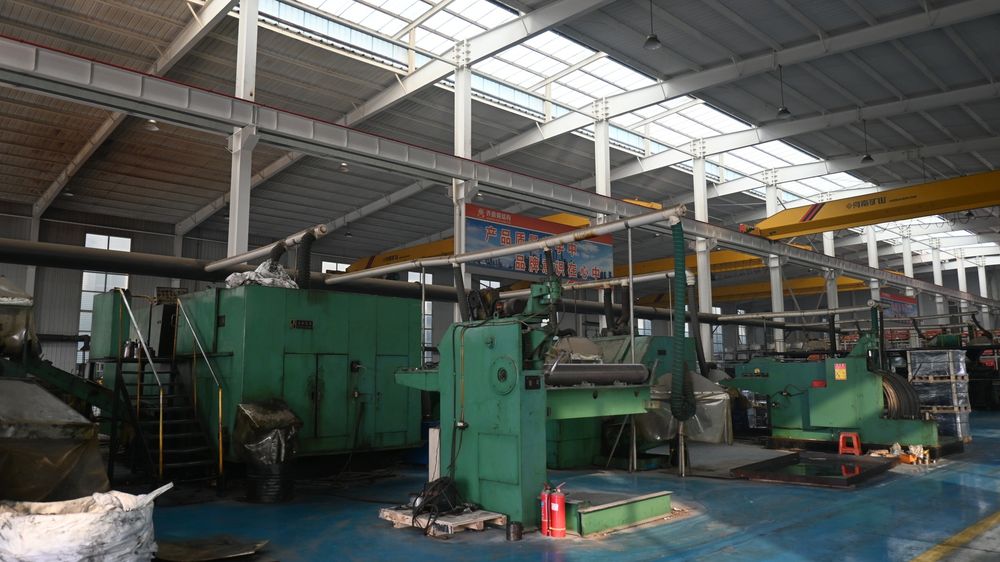
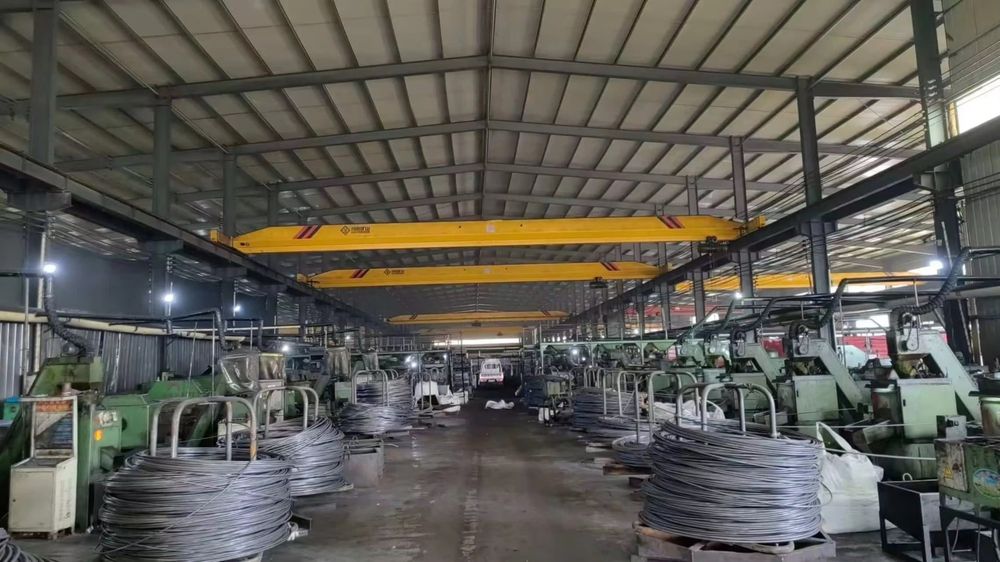
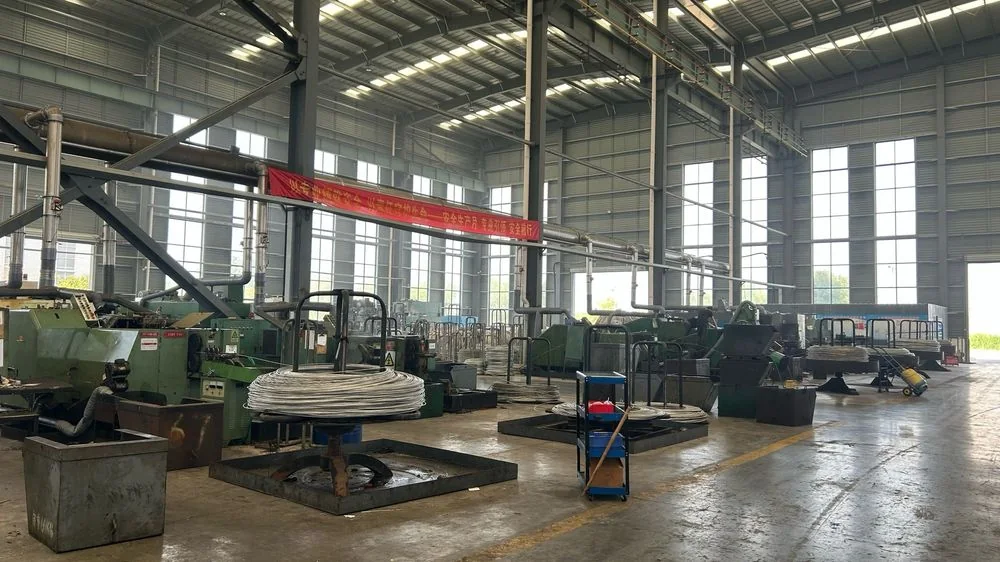
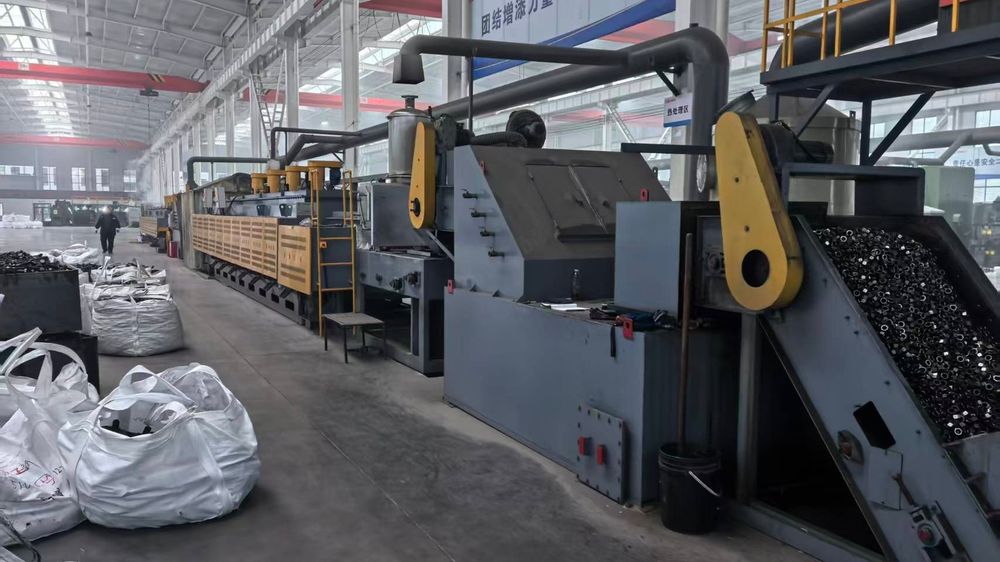
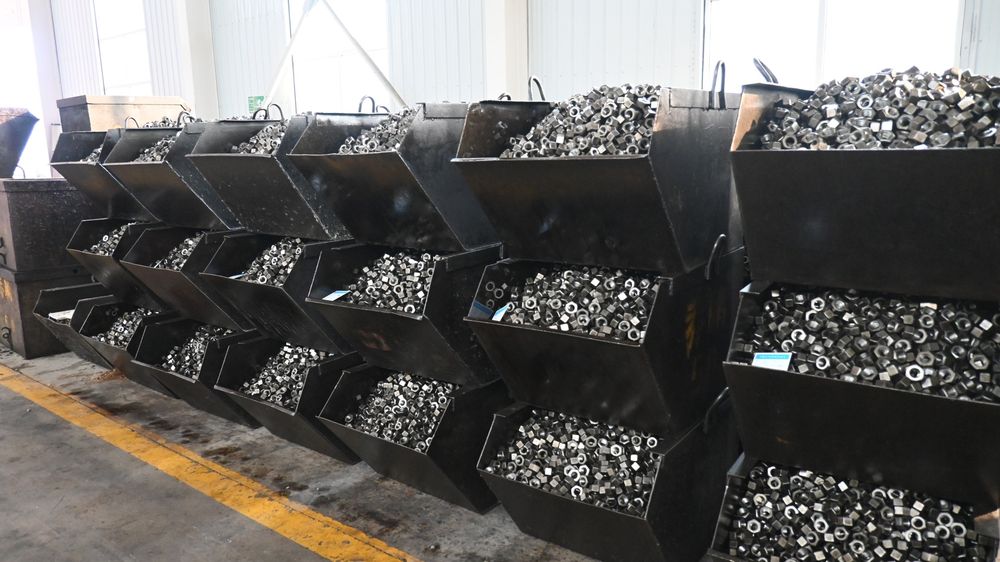
Handan Yongdao Metal Products Co., Ltd. runs the range in a plant of about 20,000 square metres, roughly 300 employees and an annual capacity near 25,000 tons, with heading, tapping, finishing and packing in one location. The quality system is ISO 9001 certified; thread gauging keeps first-pass acceptance at about 99.8%, critical dimensions hold CPK 1.33 or better, and on-time delivery is about 98.5%.
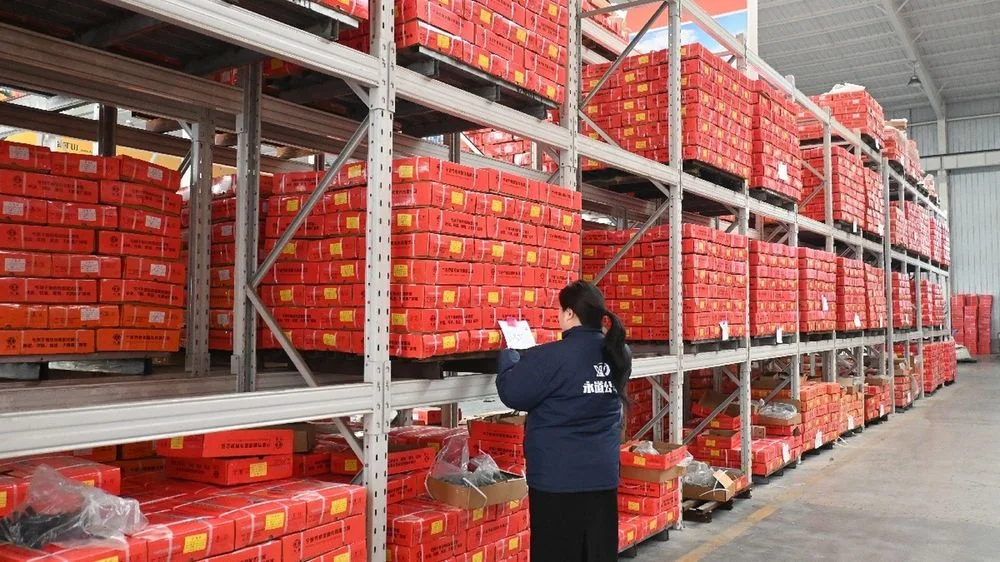
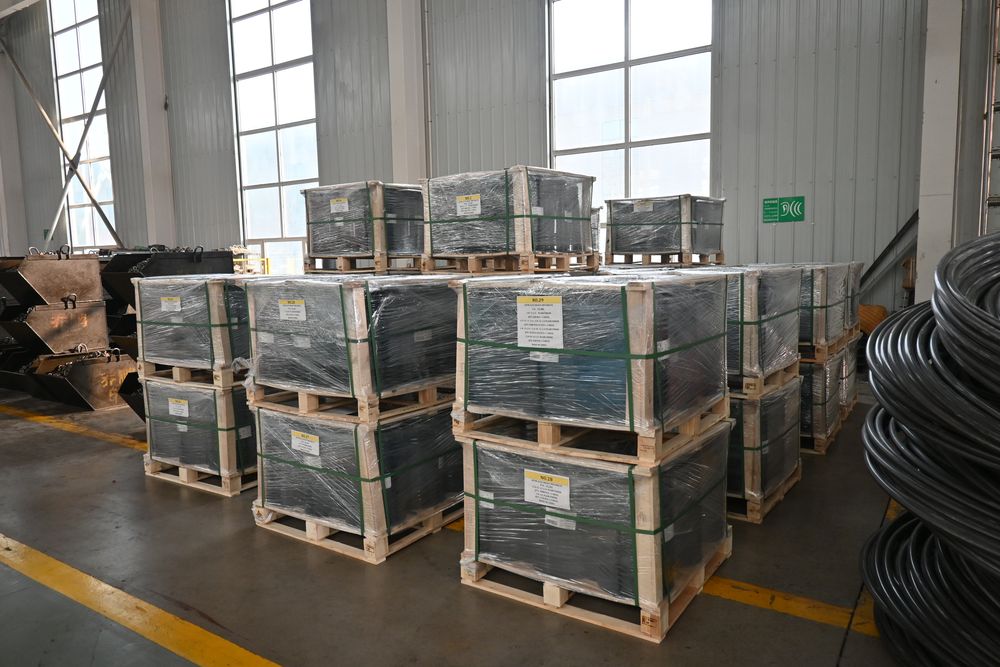
Commercial terms are MOQ 1,000 pieces per size, 7-day dispatch on stock sizes and 15 to 25 days for batch production, with A4-80 usually made to order. OEM options include grade selection, surface passivation, marking and neutral branded packaging, and matched stainless bolts and washers can ship in the same carton so the joint is one alloy throughout.
Storage matters more with stainless than with plated parts. Keep the nuts in their original packing away from carbon steel dust and grinding sparks, because embedded iron particles rust on a stainless surface and are then blamed on the material. A simple plastic-lined carton and a covered shelf prevent most of the cosmetic complaints that reach suppliers of stainless fasteners.
Applications
FACTORY TOUR
PACKING & DELIVERY
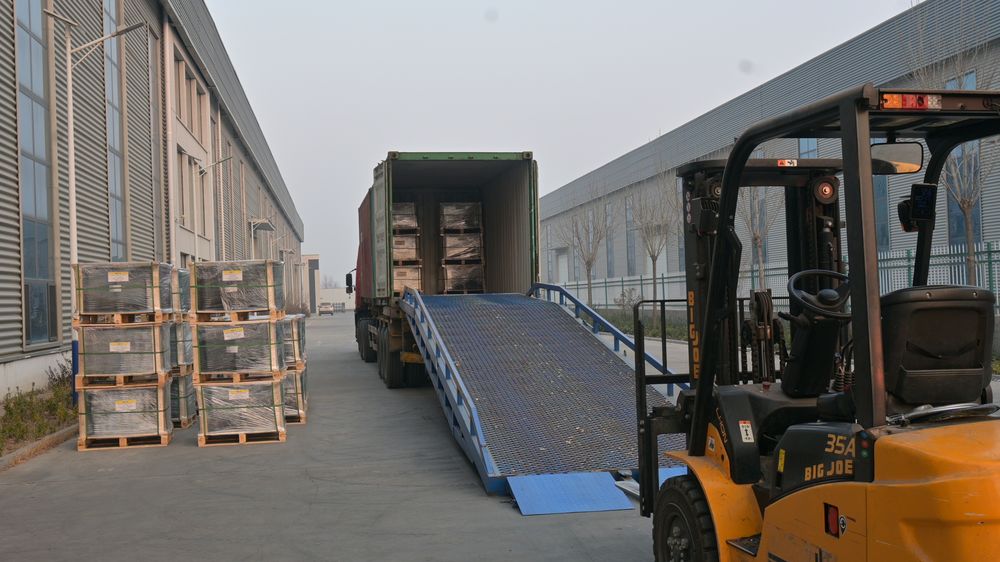
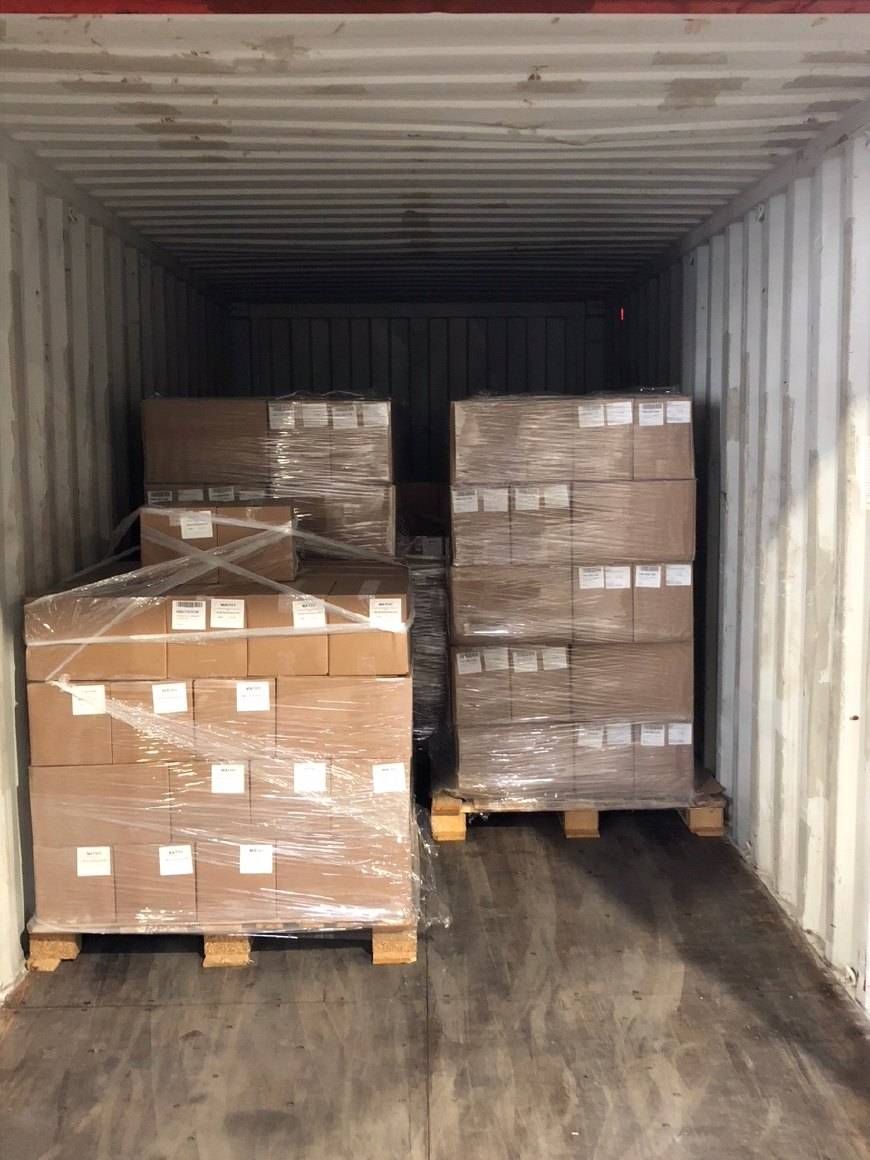
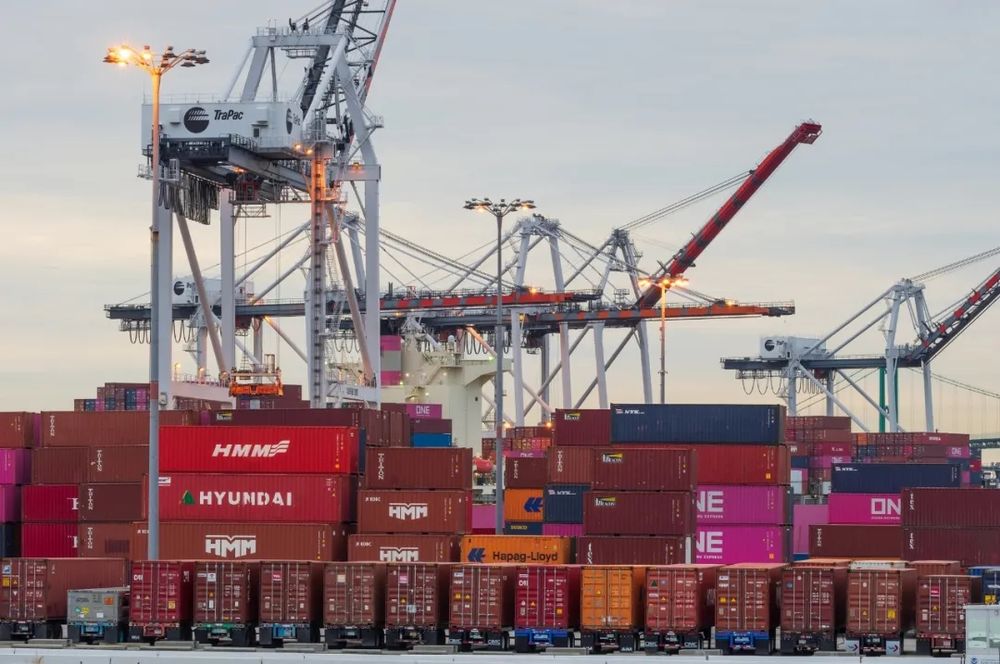
Customized delivery process
Order precautions
Before placing an order, please confirm the required product category with our sales or service staff. Customized products are not eligible for return or exchange; ex-works prices do not include taxes or freight. Every batch is strictly inspected before shipment, and minor imperfections are not considered quality problems. Please check the goods carefully upon receipt and contact us promptly if you have any questions.
- 1Provide custom drawings
- 2Choose material
- 3Get a quotation
- 4Sign the contract
- 5Production
- 6Packing & shipping
- 7Confirm receipt
- 8Order completed
Product inquiry
Related products
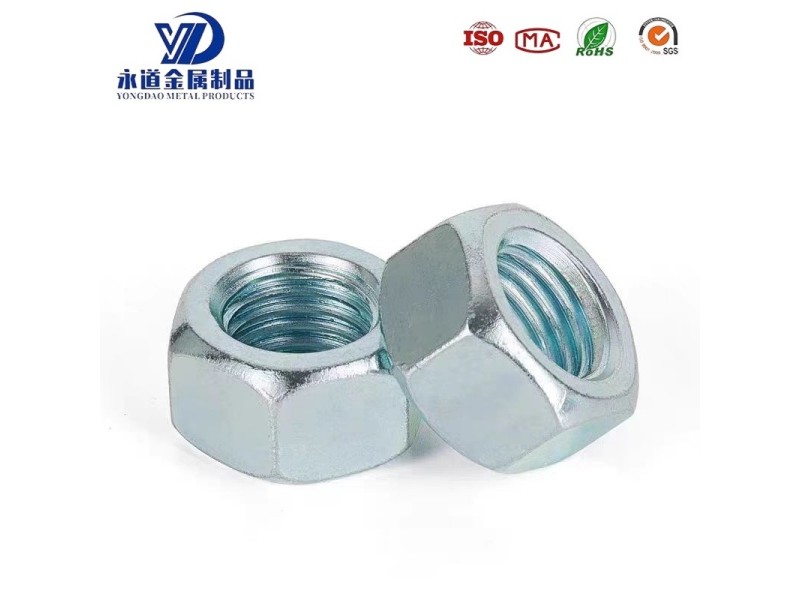 Grade 4/8 Carbon Steel Zinc-Plated Hex Nut
 Grade 4/8 Carbon Steel Yellow Zinc-Plated Hex Nut
 Grade 4/8/10/12 Carbon Steel Hot-Dip Galvanized Hex Nut
 Grade 4/8/10/12 Carbon Steel Black Oxide Hex Nut
 Zinc-Plated Thin Hex Nut
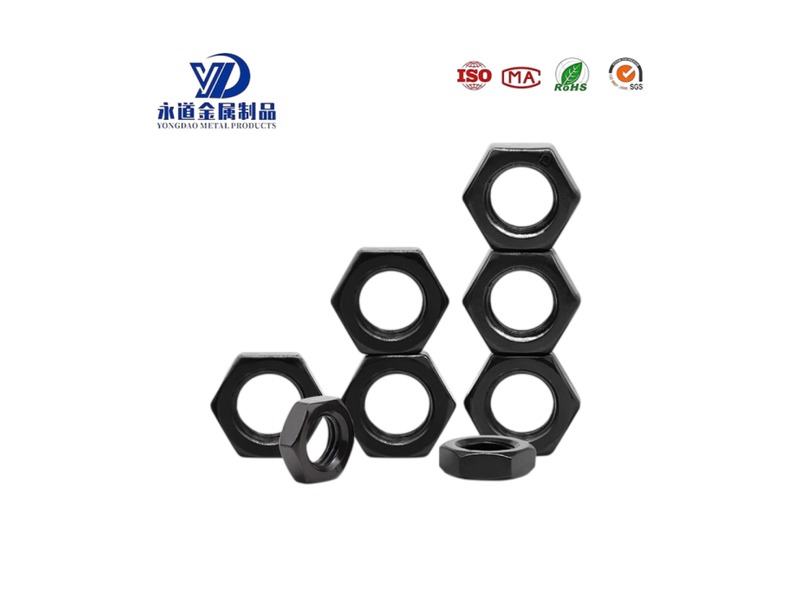 Black Oxide Thin Hex Nut
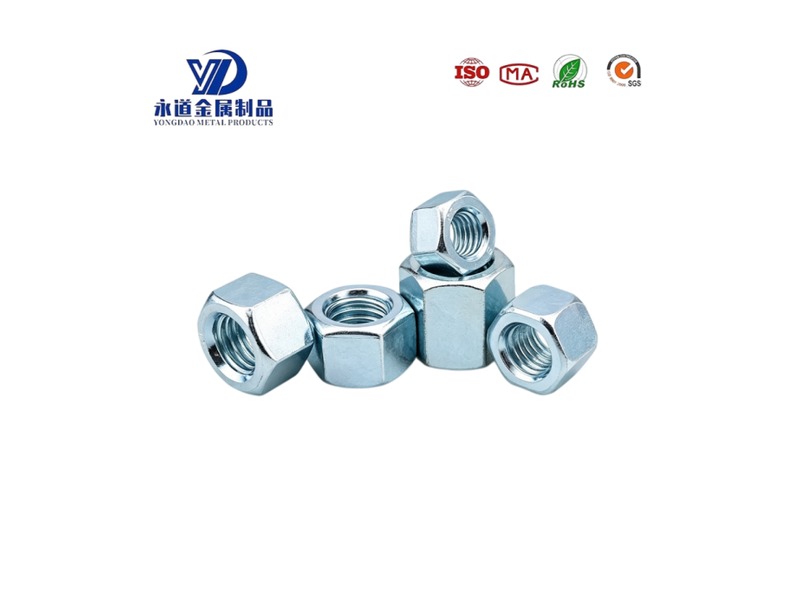 Thick (Heavy) Hex Nut
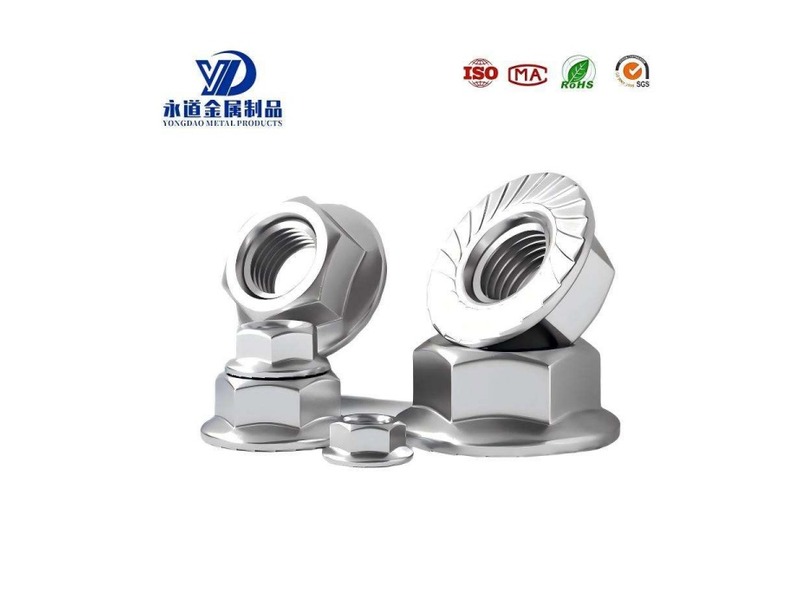 Grade 4/8 Carbon Steel Zinc-Plated Flange Nut
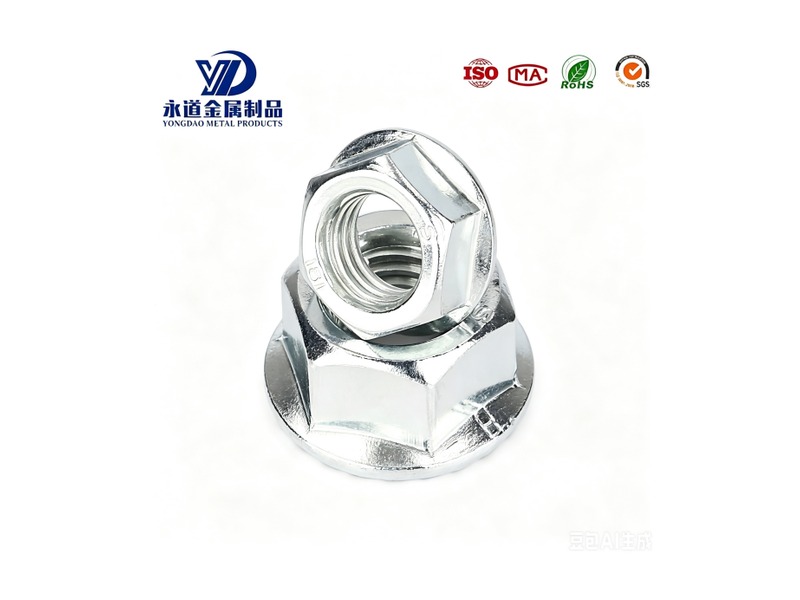 Grade 4/8 Carbon Steel Yellow Zinc-Plated Flange Nut
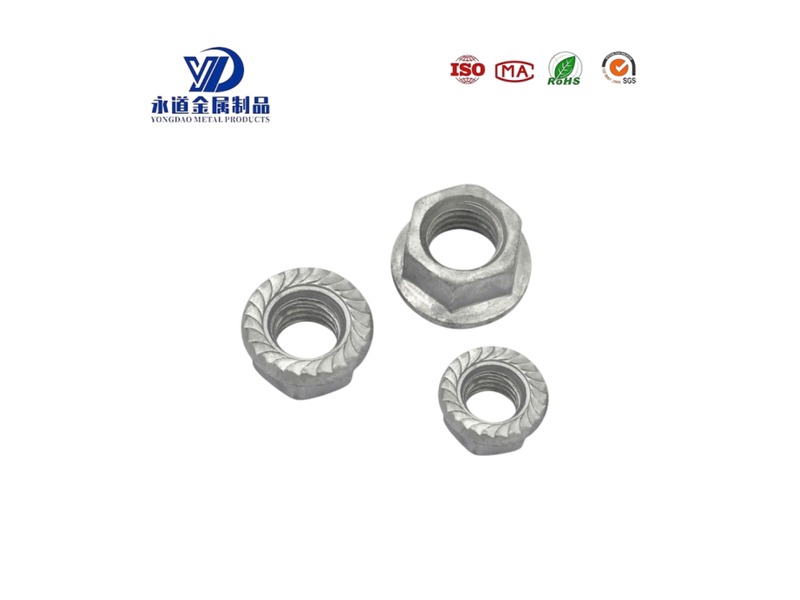 Grade 4/8/10 Carbon Steel Hot-Dip Galvanized Flange Nut
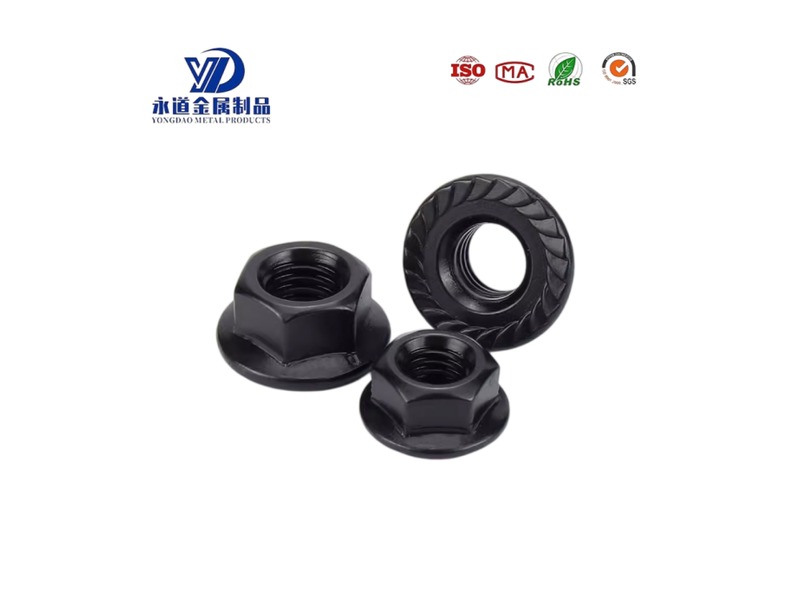 Grade 4/8/10/12 Carbon Steel Black Oxide Flange Nut
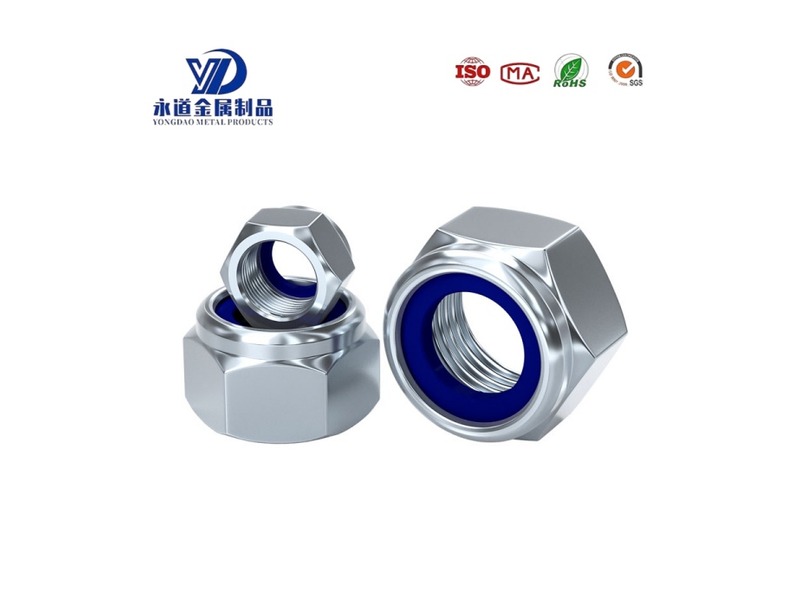 Carbon Steel Zinc-Plated Nylon Insert Lock Nut
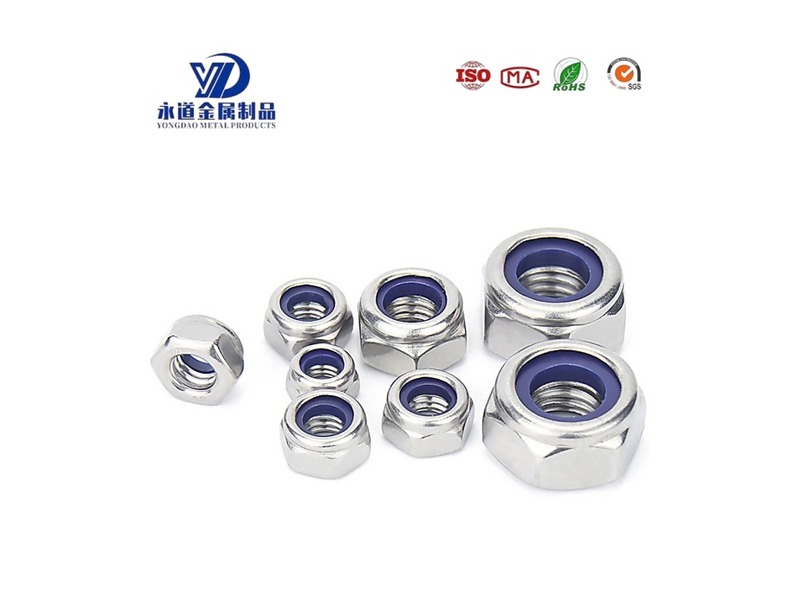 Stainless Steel Nylon Insert Lock Nut
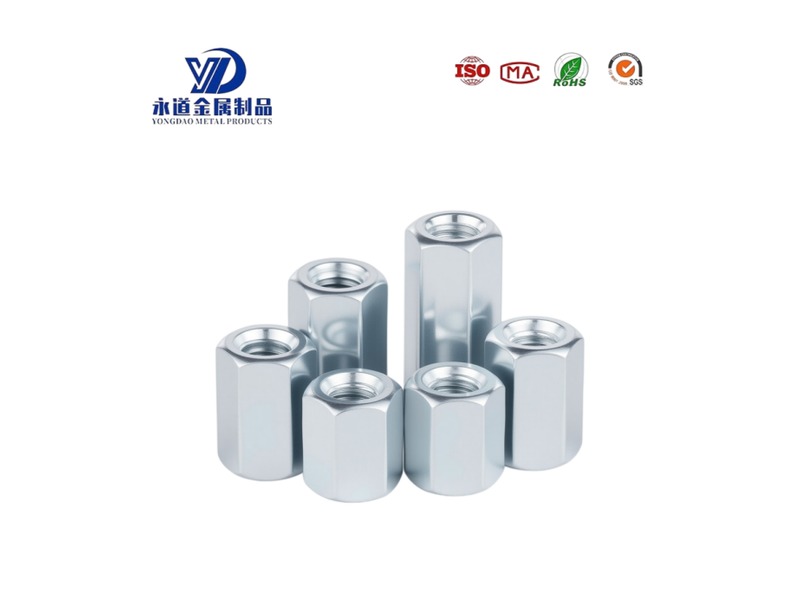 Carbon Steel Long Hex Zinc-Plated Coupling Nut
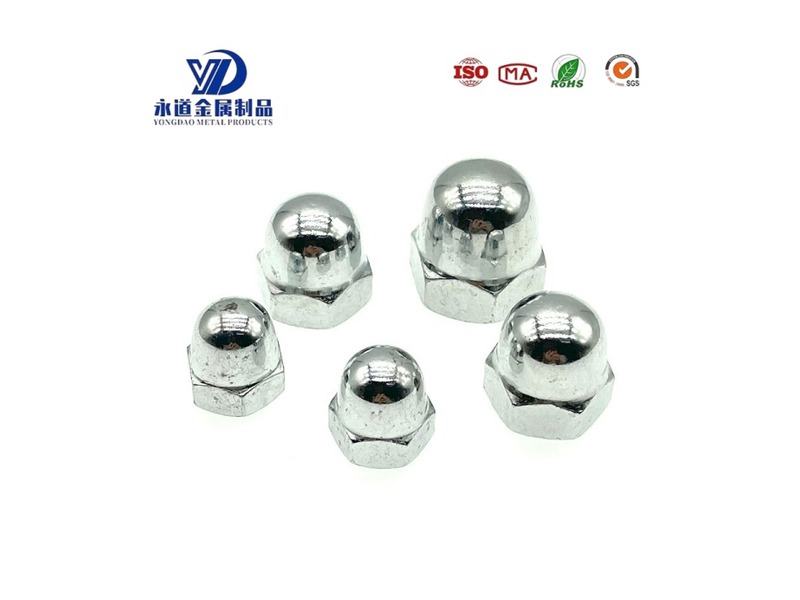 Carbon Steel Zinc-Plated Cap Nut
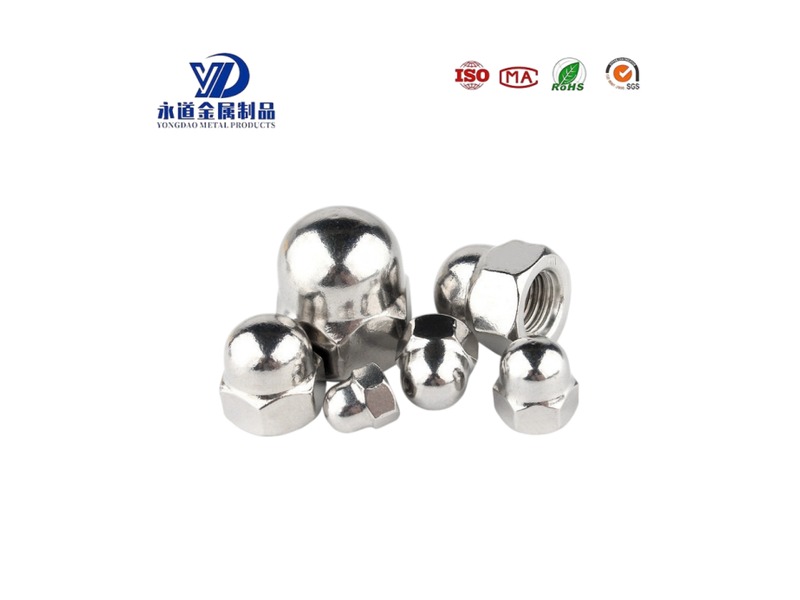 Stainless Steel Cap Nut
Frequently Asked Questions
Common questions about production, customization and orders
Should I choose A2-70 or A4-80?
A2-70 suits atmospheric, freshwater and mild chemical service. A4-80 with molybdenum is specified where chlorides are present, such as coastal, de-icing and pool plant.
Why do stainless nuts seize on the bolt?
That is galling, a cold weld between stainless surfaces under pressure. Use a matched stainless bolt, apply suitable lubricant and keep tightening speed low to prevent it.
Can a thin stainless nut replace a standard nut?
Only where the lower proof load is acceptable. Fewer engaged threads reduce capacity, so structural joints need a full-height nut or a redesign.
Is the nut supplied with any coating?
No. It is supplied uncoated and may be passivated; the corrosion resistance comes from the alloy, not from a plated layer.
Do you supply matching stainless bolts?
Yes. Bolts, nuts and washers in the same grade are produced and packed together, which reduces galling risk and keeps the joint one alloy.
What are MOQ and lead times?
MOQ 1,000 pieces per size, about 7 days for stock sizes, and 15 to 25 days for batch production, with A4-80 typically made to order.